Wildfire Mitigation for Leavenworth Homeowners: Creating Defensible Space That Works
The Wildfire Reality in Leavenworth
If you own a home in Leavenworth or the surrounding Upper Wenatchee Valley, wildfire is not an abstract threat. It is a real and present danger that has shaped our landscape, our community planning, and, increasingly, our property maintenance priorities. Leavenworth sits within the Wildland-Urban Interface (WUI), where human development meets undeveloped wildlands, and history has shown repeatedly that wildfires in Central Washington can grow rapidly and threaten communities with little warning.
The dry summers, frequent lightning, steep terrain, and dense forests that characterize our region create ideal conditions for wildfire. Climate change has intensified fire seasons, with hotter, drier summers leading to larger, more intense fires. For Leavenworth homeowners, the question is not whether a wildfire will threaten the area, but when. The good news is that there are proven steps you can take right now to dramatically improve your home's chances of surviving a wildfire. At Clifton Tree Service, we help homeowners create effective defensible space every day, and this guide shares our expertise with you.
What Is Defensible Space?
Defensible space is the area around your home where vegetation and other combustible materials are managed to reduce the risk of fire reaching your structure. It also provides firefighters a safer area from which to defend your home. Research by fire scientists has consistently shown that homes with well-maintained defensible space are significantly more likely to survive a wildfire than homes without it.
Defensible space is not about clearing everything and creating a moonscape around your home. It is about strategic vegetation management that reduces fire intensity and eliminates the pathways fire uses to travel from the wildland to your structure. Done properly, defensible space can be attractive, ecologically sound, and highly effective.
The Three Zones of Defensible Space
Zone 1: The Immediate Zone (0-5 feet from the home)
This is the most critical zone and the one that has the greatest impact on your home's survival. The area within 5 feet of your home should be as non-combustible as possible. This means no plants (even irrigated plants), no bark mulch, no firewood, no stored lumber, and no other combustible materials directly against or very close to the structure. Use gravel, stone, or concrete in this zone. Keep gutters clear of needles and debris. Ensure vents are covered with 1/8-inch metal mesh to prevent ember entry.
Zone 2: The Intermediate Zone (5-30 feet from the home)
In Zone 2, the goal is to reduce the amount and continuity of vegetation so that fire cannot easily reach your home. This includes removing dead vegetation and dry grass, pruning trees so the lowest branches are 6-10 feet above the ground, spacing trees so their canopies do not touch (typically 10 feet between crowns), removing ladder fuels like shrubs growing under trees, and keeping lawns mowed and irrigated during fire season. Hardwood trees and fire-resistant plants are preferred in this zone. If you have firewood, store it at least 30 feet from any structure.
Zone 3: The Extended Zone (30-100 feet or more from the home)
Zone 3 focuses on reducing the overall intensity of a wildfire approaching your home. This does not mean clear-cutting. It means selectively thinning trees to create spacing, removing dead trees and heavy accumulations of downed woody material, and managing the understory to break up continuous fuel beds. The goal is to change a potential crown fire (which burns in the tree tops at extreme intensity) into a surface fire (which burns along the ground at lower intensity and can be more easily managed by firefighters).
Specific Steps for Leavenworth Properties
Every Leavenworth property is different, but here are common actions that apply to most homes in our area:
Thin your Ponderosa pines: Dense Ponderosa pine stands are common around Leavenworth homes. Thinning these stands to 15-25 foot spacing between mature trees reduces crown fire risk, improves individual tree health, and makes your forest more resilient. Keep the healthiest, most vigorous trees and remove the weakest, most crowded, and most stressed specimens.
Limb up your conifers: Removing the lower branches of conifers eliminates the "ladder" that carries ground fire up into the crown. We recommend limbing Ponderosa pines up to at least 8-10 feet and Douglas firs up to 6-8 feet, depending on the tree's size and the site conditions.
Remove dead trees and snags: Dead trees are fire accelerants. They ignite easily, burn intensely, and can shower the area with burning embers. Remove all dead trees within 100 feet of your home, and consider removing any dead trees that could fall on your home from further away.
Clear needle duff and debris: Accumulated pine needles, cones, bark, and small twigs create a dense fuel bed on the forest floor. Rake and remove this material from around your home, deck, and other structures, paying special attention to areas where debris accumulates, such as corners, edges, and under decks.
Address your roof and gutters: Your roof is the most vulnerable part of your home during a wildfire because it catches wind-blown embers. Keep your roof and gutters clear of needles and debris throughout fire season. If you are replacing your roof, choose Class A fire-rated roofing materials.
Screen vents and openings: Embers can enter your home through vents, gaps in siding, and open windows. Install 1/8-inch metal mesh over all vents and close gaps where embers could enter.
Professional Wildfire Mitigation Services
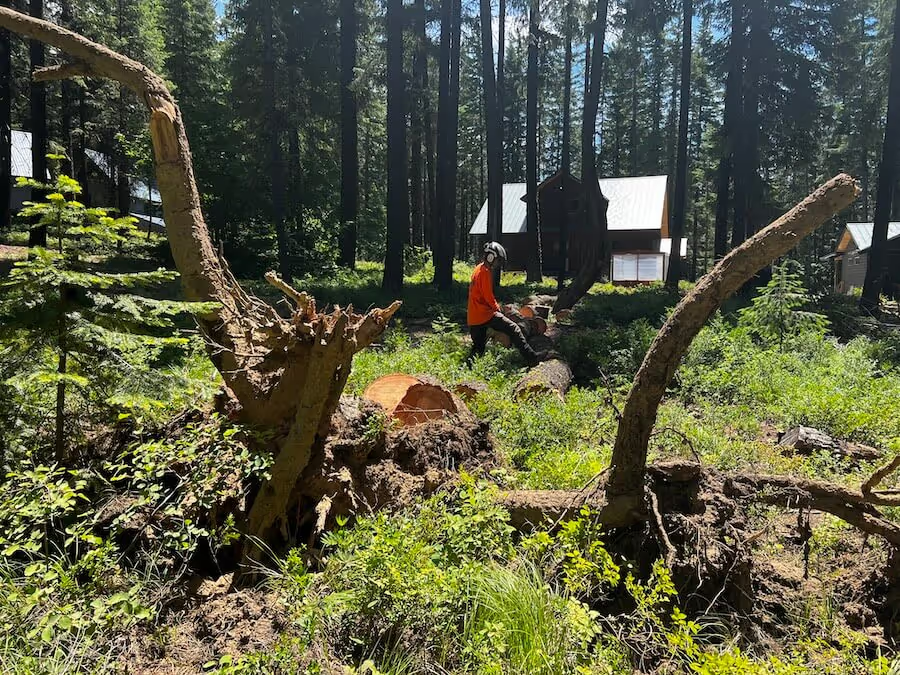
While some defensible space maintenance can be done by homeowners, much of the heavy lifting requires professional tree service equipment, expertise, and labor. Thinning dense forest stands, removing large dead trees, limbing mature conifers, and processing the resulting slash are jobs for trained arborists with the right tools.
At Clifton Tree Service, wildfire mitigation is one of our core services. Our process begins with a thorough property assessment where our ISA Certified Arborist walks your property with you, identifies risks, and develops a prioritized plan of action. We then execute the plan, thinning stands, removing hazard trees, limbing conifers, clearing brush, and processing all slash through chipping or hauling.
We can also help your neighborhood or HOA develop a community-wide wildfire mitigation plan and work toward Firewise USA recognition, which may provide insurance benefits and demonstrates your community's commitment to wildfire preparedness.
Cost and Return on Investment
Wildfire mitigation is an investment in your home's safety, but it does not have to break the bank. The cost varies based on property size, tree density, terrain, and accessibility. For many Leavenworth properties, initial defensible space creation ranges from $2,000 to $10,000, with ongoing annual maintenance running $500 to $2,000.
The return on investment is clear: your home is far more likely to survive a wildfire with proper defensible space. Additionally, many insurance companies offer discounts for homes with documented wildfire mitigation, and Firewise USA communities may receive additional benefits. Some grant programs through the Chelan County Conservation District and other organizations may help offset mitigation costs. Contact us, and we can help you explore available programs.
Get Started Today
Every fire season that passes without addressing your defensible space is a gamble. Do not wait until fire is on the horizon to take action. Contact Clifton Tree Service at (509) 398-2840 or through our online form to schedule your free wildfire mitigation assessment. We will visit your property, evaluate your current risk level, and provide a clear plan with honest pricing to protect your home. Serving Leavenworth, Lake Wenatchee, Plain, Cashmere, Wenatchee, Peshastin, Dryden, and the Upper Wenatchee Valley.
Clifton Tree Service
ISA Certified Arborist on staff
Clifton Tree Service is a Leavenworth-based team focused on safe, professional tree care in the Upper Wenatchee Valley. We combine ISA-certified expertise with local knowledge of mountain species, forest health, and wildfire mitigation so every project is handled with the right plan and equipment.
Frequently Asked Questions
Related Services
Want a free estimate for your project?
Get in touch today to schedule your free quote.
Get a Free Estimate
